Skip to content

The Age You Stopped Laughing
When did you last laugh so hard it hurt? If you had to stop and think, you're not alone. In this piece, Pooja Bedi explores the humour cliff, the age our laughter quietly starts to fade, why reclaiming joy is foundational rather than frivolous, and how to laugh like you mean it again.

Quick question, and be honest.
When was the last time you laughed so hard that your stomach actually hurt? The kind where you couldn’t breathe, couldn’t speak, had tears streaming down your face and possibly made a sound you’d deny in court? The kind of laughter that, if we’re being truthful, occasionally threatens the structural integrity of your pelvic floor?
For some of you, the answer came instantly. For a worrying number of you, you’re now scrolling back through the last few weeks, then months, with a slowly dawning unease. And that pause, that little hunt through your memory for the last really good laugh, is the entire reason I’m writing this.
Because somewhere along the way, most of us quietly stopped laughing the way we used to. Not all at once. Nobody announced it. There was no ceremony. We just… tapered off. And here’s the unsettling part. Researchers can even tell you roughly when it starts.
Welcome to the Humour Cliff
It has a name, this slow slide into solemnity. It’s called the humour cliff. And Gallup data cited by Stanford researchers Jennifer Aaker and Naomi Bagdonas suggests that our laughter and our sense of humour begin to drop around a startlingly specific age.
Twenty-three.
Twenty-three. That’s it. Barely out of the gate. You’re not even settled into adulthood, you’ve possibly still got the receipt for it, and already the giggling begins to drain out of your days. The reasons are the ones you’d expect and can probably feel in your own shoulders: work stress, mounting responsibilities, pressure, bills, the relentless business of being a Serious Adult with Serious Concerns.
It’s often said that a child laughs around 300 times a day while the average adult manages a measly 17. I’ll be honest, that exact number is quoted far more often than it’s rigorously proven, so hold it loosely. But you don’t need a peer-reviewed study to know the direction of travel is true. You’ve felt it. I’ve genuinely met people who haven’t had a proper belly laugh in weeks. Weeks. Walking around, competent and composed and quietly starving for something they can’t quite name.
And here’s what I find almost criminal about it. We are voluntarily rationing one of the most delicious, freely available, side-effect-free pleasures we own. Imagine being handed an unlimited supply of something that can ease stress, soften pain, lift your mood, connect you to the people around you and costs absolutely nothing, and deciding, somewhere around your mid-twenties, to just… use less of it.
The Great Lie of “Behaving Your Age”
So what actually happens at 23? What robs us?
It isn’t age. Let me be very clear about that, because it’s the whole point. My mother, when asked her age at 45, used to answer, “Emotionally I’m 16, mentally I’m 60, spiritually I’m thousands of years old, and physically, hmmm, somewhere between 1 and 100. How does it matter?” She was a child at heart, always laughing, playful, naughty, up for any adventure, and also, when required, tough, focused and formidable. She understood something most of us forget. Growing old is inevitable. Growing up is optional.
The mojo doesn’t wither because of birthdays. It withers because of the acceptance of monotony, the fear of change, and the sheer beige comfort of inertia. We start managing our lives instead of living them. We trade wonder for competence. And somewhere in there we absorb the single most joyless instruction ever handed to a human being: behave your age.
What does that even mean? Who decided it? When Martina Navratilova was asked how she played such a phenomenal game at 40, she said simply, “The ball doesn’t know how old I am.” I love that with my whole heart. Because how old you are is chronological, a number, a fact. How old you feel and behave is decided entirely in the six inches between your ears. And that brain of yours will only ever serve back what you feed it. Feed it seriousness, obligation and log kya kahenge, and it will dutifully produce a joyless adult. Feed it play, and watch what happens.
There’s an important distinction here, and it’s one I hold close. There is a world of difference between childlike and childish. Childish is immature, irresponsible, a burden on everyone around you. Childlike is wonder, spontaneity, delight, the ability to be genuinely thrilled by a good meal, a silly joke, a sunset, a dog that looks vaguely like its owner. Nurturing your childlike self is not a failure to grow up. It’s a refusal to shrivel.
How to Laugh Like You Mean It Again
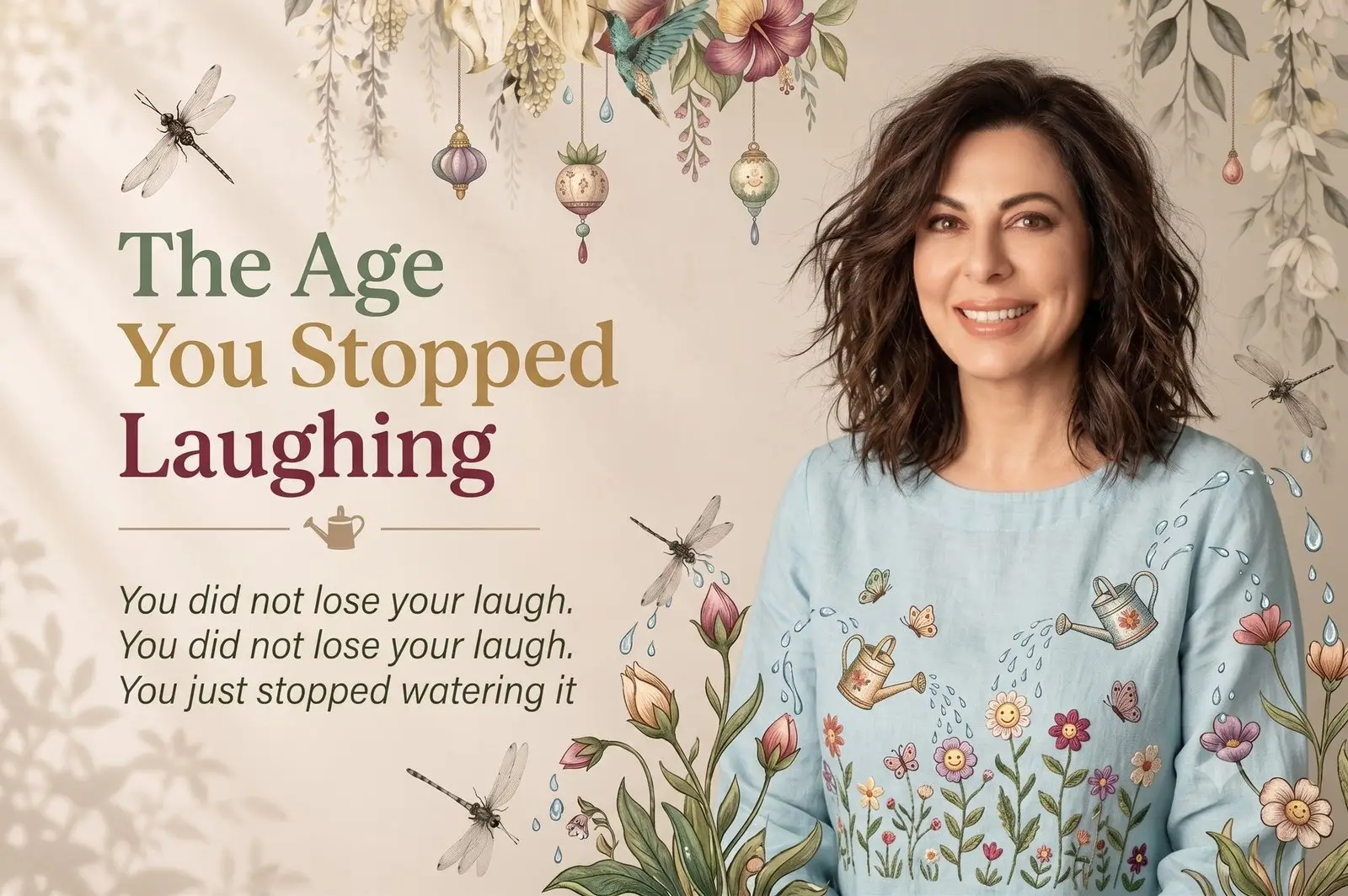
The wonderful news, and it is genuinely wonderful, is that this is not a one-way street. You did not lose your laugh. You just stopped watering it. And it comes back faster than you’d think.
Start, if you have to, by faking it. This sounds absurd, but it works, and there’s a whole global movement of laughter clubs built on exactly this principle. People gather and begin with small bursts of entirely fake, forced laughter, and within minutes the fakery collapses into the real thing, because laughter is gloriously contagious, and the body often follows the performance until the performance becomes real. Ridiculous? Completely. Effective? Annoyingly so.
Then, feed the thing you want to grow. Watch the comedy instead of the news for once. Spend time with the friend who makes you snort into your drink, the one who sees the lighter side of everything, and less time with the ones who treat cheerfulness as a character flaw. Humour is ignitable. Sit near it and you catch fire.
And here is the one that changed the most for me, learn to laugh at yourself. My mother always told me not to take myself too seriously, to laugh at my own oddities, my mistakes, my gloriously flawed choices. And doing it was strangely, enormously liberating. It also had an unexpected effect on everyone around me. Watching me refuse to be precious about myself seemed to give other people permission to loosen their own grip, to stop performing dignity and start actually enjoying their lives. Your laughter does that. It’s not just yours. It hands everyone in the room a little permission slip.
So here is my invitation, and it might be the easiest one I’ve ever offered you. Today, at some point, laugh like you did before you turned 23. Loudly. Foolishly. Without checking who’s watching or worrying whether it’s dignified. Find the joke, the friend, the memory, the ridiculous video, whatever it takes, and let it properly rip.
Because the question underneath all of this is one worth sitting with. Did you actually grow up? Or did you just quietly stifle the child within you, the one still tugging at your sleeve, asking, rather patiently, if it might be allowed to come out and play again?
Your happy inner child, or an emerging serious, joyless adult. Which one are you nurturing? It’s honestly one of the most important choices you’ll ever make. And learning to hear and free that inner child is some of the most joyful work inside LIMITLESS, because happiness is not only something you find. Sometimes it is something you remember.
Frequently Asked Questions (FAQs)
Why do we laugh less as we get older?
Largely because of accumulating stress, responsibility and pressure rather than age itself. Research on humour by Stanford’s Jennifer Aaker and Naomi Bagdonas, drawing on large-scale Gallup data, suggests our laughter begins to decline around the age of twenty-three, a phenomenon sometimes called the humour cliff, as work, bills and the weight of adult life crowd out spontaneous joy. The important thing to understand is that this decline isn’t inevitable or permanent. It’s a habit we drift into, not a fixed feature of getting older, which means it can absolutely be reversed with conscious effort.
Is laughter actually good for your health?
Yes, laughter offers genuine physical and emotional benefits. According to sources like the Mayo Clinic, it can stimulate the heart, lungs and muscles, activate and then relieve your stress response, soothe tension, ease pain and lift mood, both yours and that of everyone around you, because laughter is genuinely contagious. It’s also one of the most powerful social tools we have for bonding, breaking tension and building connection. While it’s not a substitute for medical care, the wellbeing benefits of a good, hearty laugh are real and well worth taking seriously, especially in a life that has quietly become too serious.
What is the difference between being childlike and childish?
Childlike and childish are worlds apart, and understanding the difference is key. Childish behaviour is immature and irresponsible, a burden on the people around you. Childlike qualities, on the other hand, are wonder, spontaneity, playfulness, curiosity and the ability to find delight in small things. Nurturing your childlike self doesn’t mean shirking responsibility or refusing to grow up. It means refusing to let the joy, curiosity and playfulness drain out of you as the years pass. One is a failure to mature. The other is a refusal to shrivel.
How can I bring more laughter and joy back into my life?
Start by consciously making space for it rather than waiting for it to arrive on its own. Watch comedy, spend time with people who see the lighter side of life, and reduce time with those who treat joy as frivolous. You can even begin with forced laughter, which is the principle behind laughter clubs, because fake laughter reliably tips over into the real thing. Above all, learn to laugh at yourself and your own oddities and mistakes, which is both liberating for you and permission-giving for everyone around you. Joy is a habit you can rebuild.
Does growing up mean I have to be serious all the time?
Not at all, and believing you do is one of the quietest thieves of happiness there is. Growing old is inevitable, but growing joyless is entirely optional. Emotional maturity is not the same as emotional lethargy, and being responsible does not require you to abandon playfulness, wonder or a good belly laugh. Some of the most grounded, successful and emotionally mature people are also the most playful. The instruction to simply behave your age is worth questioning, because nobody ever actually defined what that means or why joy should expire with youth.
LIMITLESS is a transformative 12-week self-paced online course by Pooja Bedi, designed to help you reprogram your mind, overcome limiting beliefs and unlock your highest potential. Blending practical tools from NLP, clinical hypnosis, mindfulness, energy sciences and holistic wellness, the course empowers you to build confidence, cultivate a positive mindset and create lasting personal transformation. With engaging video lessons, guided meditations, exercises and access to a supportive community, LIMITLESS offers a step-by-step journey toward living with greater clarity, purpose, abundance and happiness.