Skip to content
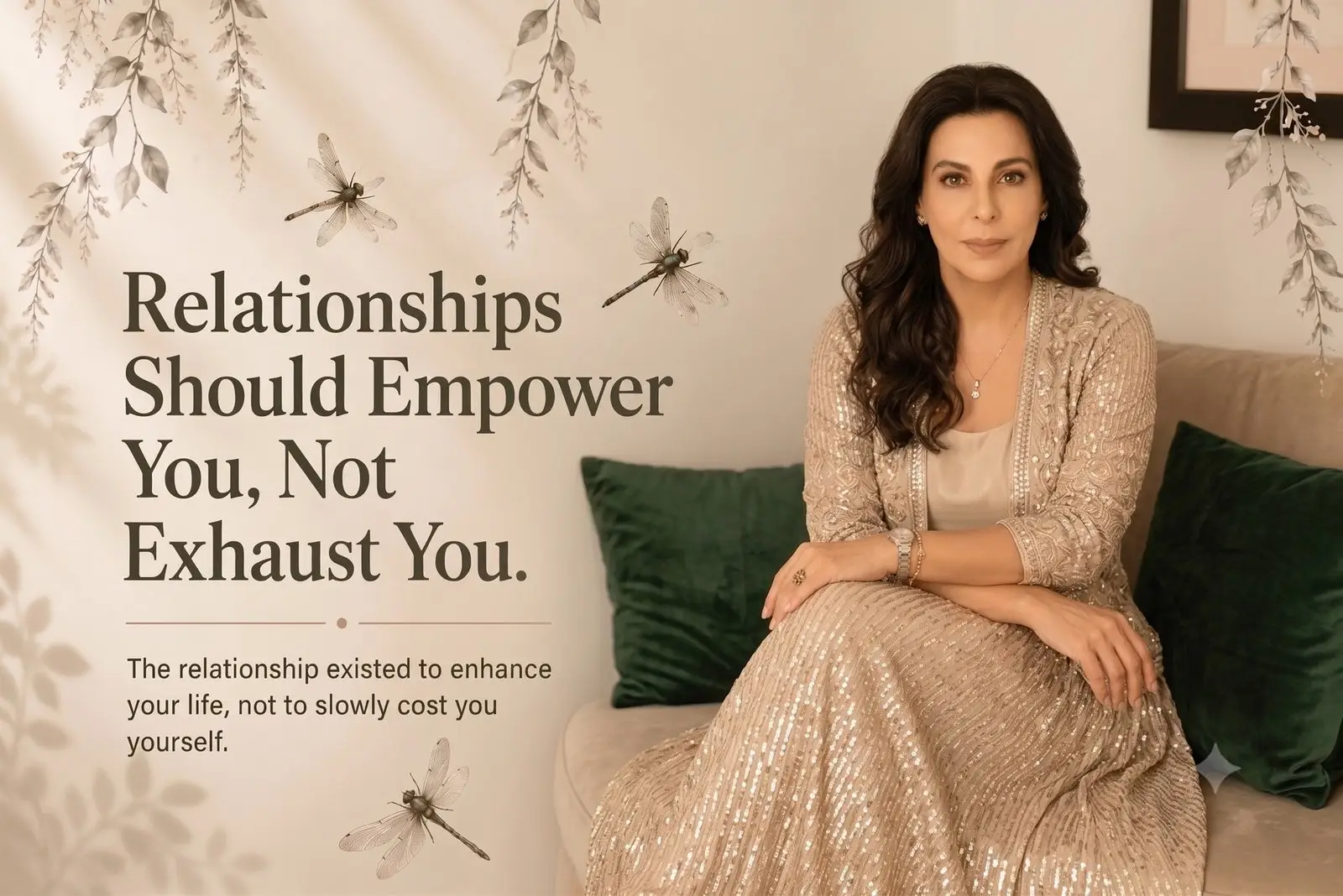
Relationships Should Empower You, Not Exhaust You
We update everything as we grow, our tastes, our cities, our sense of self, yet treat relationships as the one thing we must never outgrow. In this piece, Pooja Bedi explores why we stay in relationships that quietly drain us, how to tell empowerment from exhaustion, and why the evolved choice was never staying or leaving, but seeing clearly.

We change everything as we grow.
We change how we eat, as our bodies and our understanding evolve. We change how we dress, as our sense of ourselves shifts. We change the cities we live in, the work we do, the friends we keep, the way we spend a Sunday. We accept, without any drama at all, that the person we were at twenty-five wanted different things from the person we are at forty.
And yet there is one area of life where we resist this truth with everything we have. Relationships. We treat them as the one thing we must never outgrow, the one choice that must remain right forever simply because it was right once. We stay, long after the fit has changed, and we call that staying love, or loyalty, or commitment.
Sometimes it genuinely is. And sometimes it’s something quieter and more uncomfortable that we would rather not name.
I want to talk about that today. Not to tell you to leave anything, that is not the point of this at all. The point is something gentler and far more powerful: the willingness to look honestly. Because the evolved choice was never simply staying or leaving. The evolved choice is seeing clearly. And your one precious life deserves the honesty of knowing exactly what you’re in.
The Question Isn’t Why You Entered. It’s Why You Stay.
Here is something I’ve come to believe deeply, having lived through relationships that lasted a year and relationships that lasted twelve, each one an influential chapter, each one leaving me changed.
We spend so much time thinking about what draws us into a relationship. The chemistry, the destiny, the raging hormones, the almost magical pull that some call fate and some call good lighting. But the more revealing question is rarely why we entered. It’s why we stay.
What makes a person stay in a relationship that has clearly stopped being right for them? Not a relationship going through a rough patch, those are normal and worth fighting for. Some relationships need a conversation. Some need counselling. Some need new boundaries. Some need time, tenderness and two people willing to meet each other again. And some, after all of that, still ask for release. The honest work is telling the difference, and that takes clear eyes rather than a quick verdict.
I mean the relationship that has genuinely run its course, where the connection is gone, the respect has thinned, and two people have drifted so far that they barely recognise each other anymore.
The honest answers about why we stay are often not only about love. We stay because of the fear of social stigma, the log kya kahenge that has governed so many of our choices. We stay for the status, the comfort, the familiarity of a known unhappiness over an unknown freedom. We stay because leaving feels like failure, and we were raised to equate endings with failure rather than with growth. We stay out of habit, which is perhaps the quietest and most common reason of all. Love may be in the room too, tangled up with all of it, which is exactly what makes it so confusing from the inside.
And underneath much of it is the same thing. Fear. The fear of change, dressed up as loyalty. The fear of the unfamiliar, disguised as commitment.
What an Empowering Relationship Actually Feels Like
Let me be clear about what I am and am not saying, because this matters.
A relationship that empowers you is not one without conflict. Every relationship has friction, disagreement, the ordinary difficulty of two whole humans sharing a life. Problems will crop up regardless of how well matched you are. The measure was never the absence of problems. The measure is what the relationship does to you over time.
An empowering relationship adds to you. Not because it is perfect, but because it gives you room to be real. You can disagree without being punished. You can grow without being threatened. You can speak without rehearsing every sentence twenty-seven times first. You move through life as equals, with caring, compassion and concern, and you come away from it larger than you were.
A depleting relationship does the opposite. It slowly drains your natural light. It leaves you smaller, quieter, more anxious, less yourself. You find you’re managing rather than living, performing peace rather than feeling it, shrinking rather than expanding. And here is the part that takes real honesty to admit: to hold on to a relationship that consistently puts you off balance, that causes deep and ongoing anguish, can become a kind of self-abandonment. It defeats the very reason the relationship existed in the first place, which was to enhance your life, not to slowly cost you yourself.
This applies to every relationship, not only romantic ones. The friendship that always leaves you depleted. The family dynamic built on obligation and guilt. The professional relationship that quietly erodes your sense of worth. The question is the same across all of them. Does this add to my life, or does it subtract from it?
And one thing must be said plainly. If there is violence, coercion, intimidation or fear in your relationship, do not treat this as a simple self-reflection exercise. Safety comes first. Speak to a trusted person or a professional support service before making any sudden move. Some situations need real support and a careful plan, not just quiet reflection.
The Joy of Letting Go
Here is the reframe that took me years to arrive at, and that I now hold as one of my deepest truths.
There can be joy in ending things. Not only grief. Joy.
We are taught that the end of a relationship is a tragedy, a failure, a wound to be mourned. And of course there is pain in parting, that’s real and it deserves its space. But we forget that people come into our lives for a reason, a season or a lifetime, and that the ending of a season is not the failure of the relationship. It’s the completion of it.
Think of it this way. Do you hate the meals you once loved but have since stopped eating? Do you resent the clothes that once brought you joy but no longer fit who you are? Of course not. You’re grateful they served you when they did, and you let them go without bitterness. Why, then, are we so damning of the people who once gave us their time, their energy, their love, their lessons? Thank the past for all the happiness it brought. And understand that there can be genuine joy in releasing what is no longer meant for you, because it sets you free to experience more.
Had I compromised and settled years ago, staying in something that no longer fit out of a fear of being alone, I would never have discovered who I became on the other side of that courage. The emotional pain of parting is normal. It has its own rhythm, and it deserves respect. But pain is not proof that the ending was wrong. Sometimes it is simply the heart taking time to release what the soul already knows.
So here is your invitation, and it is only to look, not to act. Consider one relationship in your life, of any kind, and ask yourself honestly: does this empower me or exhaust me? Am I in it because it genuinely adds to my life, or because leaving, changing, or even just speaking up feels more frightening than staying stuck?
You don’t have to do anything with the answer today. You just have to be brave enough to see it clearly. Because clear sight, not staying and not leaving, is where every real change quietly begins.
This work, learning to see your relationships clearly, to understand the conditioning that keeps you attached to what no longer serves you, and to reinvent your relationship with yourself first, is at the heart of LIMITLESS.
Frequently Asked Questions (FAQs)
How do I know if a relationship is empowering or draining me?
The clearest test is how you feel over time, not in any single moment. An empowering relationship adds to you, it leaves you feeling larger, stronger, more yourself, even when it has hard days. A draining relationship subtracts, leaving you consistently smaller, more anxious, more managed than met. Ask yourself whether you feel more like yourself or less like yourself in this person’s presence across weeks and months. Occasional friction is normal in any bond. A persistent sense of being diminished is the signal worth paying attention to.
Why do people stay in relationships that aren’t right for them?
Often because fear has become tangled up with love. There may be affection, history, children, comfort, social pressure, habit and hope all sitting in the same room, which is exactly why it can feel so confusing from the inside. People stay for fear of social stigma and what others will think, for the familiarity of a known unhappiness over an unknown freedom, and very often simply out of habit. Recognising how much of the staying is fear rather than genuine desire is often the first honest step toward either repairing the relationship or releasing it.
Is it wrong to leave a relationship just because I’ve changed?
No, and the belief that it is causes enormous unnecessary suffering. We accept that we change everything else as we grow, our tastes, our work, our friendships, our sense of self, yet we treat relationships as the one thing we must never outgrow. People evolve, and sometimes they evolve together and sometimes they grow apart. Choosing a relationship that fits who you’ve become is not a betrayal of who you were. That said, growth is not the same as running from every difficulty, so the honest work is distinguishing between a relationship that has genuinely completed its season and one that simply needs renewed effort, and sometimes counselling or a real conversation.
Can you find joy in ending a relationship, or is it always painful?
Both can be true at once, and this is something we rarely allow ourselves to believe. There is real pain in parting, and it deserves to be felt rather than bypassed. But there can also be genuine joy in releasing what is no longer meant for you, because it sets you free to experience more of what is. People come into our lives for a reason, a season or a lifetime, and the ending of a season is a completion, not a failure. When you can thank a relationship for what it gave you rather than resenting it for ending, the letting go becomes far lighter.
How do I stop being afraid of being alone?
Start by noticing that sometimes the fear of being alone costs more than the solitude ever would, keeping people attached to relationships that quietly diminish them. Being alone and being lonely are not the same thing, and many people are far lonelier inside the wrong relationship than they ever were on their own. The deeper work is building a relationship with yourself that is warm and steady enough that your wellbeing no longer depends entirely on someone else’s presence. When you genuinely enjoy your own company, staying becomes a choice rather than a sentence, and that changes everything.
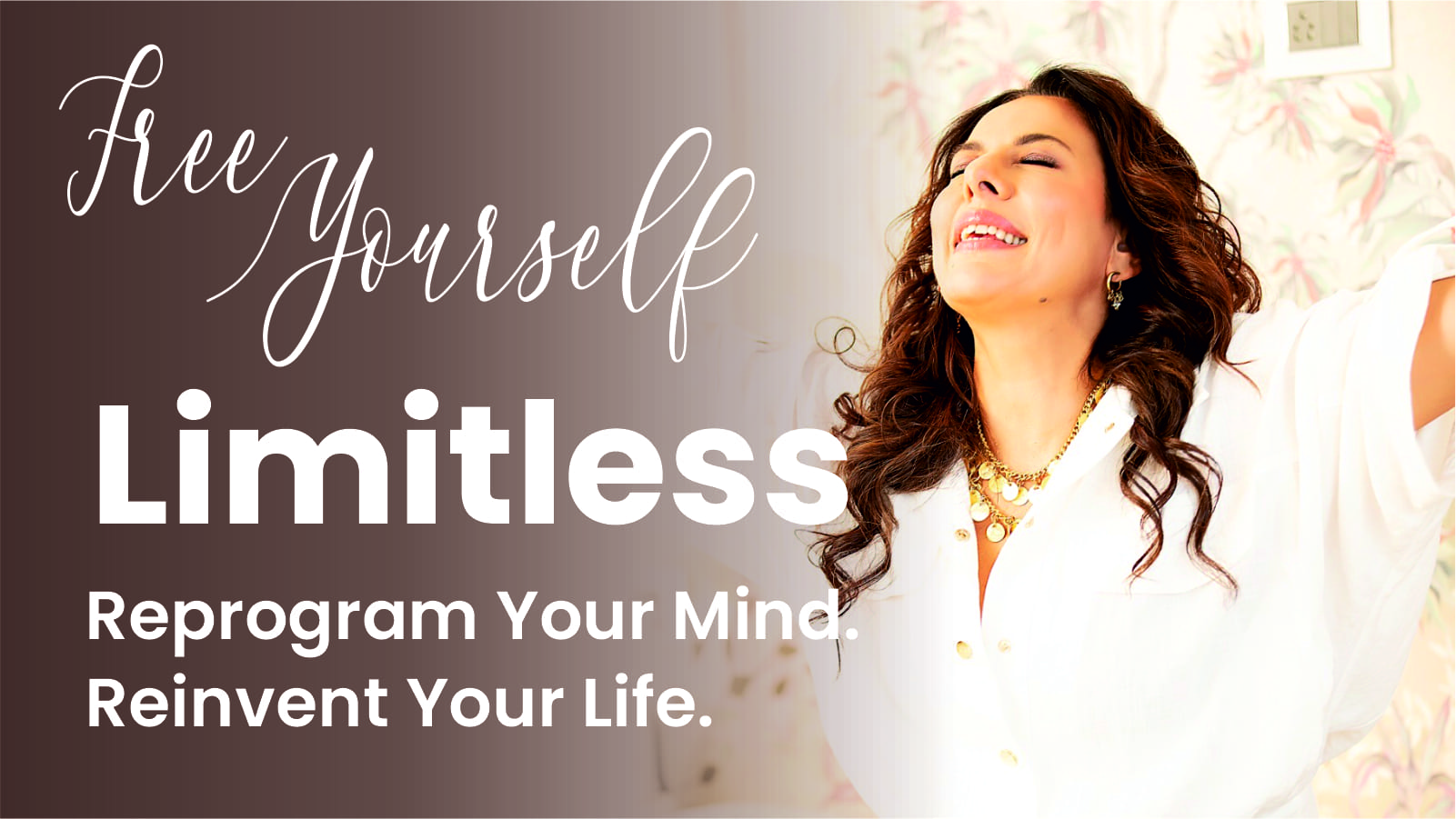
LIMITLESS is a transformative 12-week self-paced online course by Pooja Bedi, designed to help you reprogram your mind, overcome limiting beliefs and unlock your highest potential. Blending practical tools from NLP, clinical hypnosis, mindfulness, energy sciences and holistic wellness, the course empowers you to build confidence, cultivate a positive mindset and create lasting personal transformation. With engaging video lessons, guided meditations, exercises and access to a supportive community, LIMITLESS offers a step-by-step journey toward living with greater clarity, purpose, abundance and happiness.