Skip to content

When Did Everyone We Date Become a Narcissist?
He didn't text back? Avoidant. She wants the plan confirmed? Anxious. He remembered the argument differently? Gaslighting. Somewhere we all became psychologists. In this piece, Pooja Bedi on how therapy language escaped the therapist's office, why weaponising it is making us lonelier, and the difference between naming real harm and diagnosing our way out of every relationship.


Somewhere in the last few years, a quiet miracle occurred. We all became psychologists.
Not trained ones, obviously. We didn’t do the degree, the supervision or the years. We just downloaded the vocabulary and now, armed with a dozen clinical terms and a phone, we can diagnose an entire human being from across a dinner table. He didn’t text back quickly? Avoidant attachment!!! She wants the plan confirmed? Anxious!!! . He remembered an argument differently from you? I’m being Gaslighted!. He talked about himself for a bit too long? Obviously a textbook narcissist. Case closed. Next…. !
It’s remarkable, really. An entire generation fluent in a language it was never actually taught to use. And I want to talk about it, because I think something has gone slightly sideways. The words are good words and they name real and serious things. But we’ve started swinging them around like weapons, and in doing so, we may be making ourselves lonelier, angrier and considerably worse at the one thing they were meant to help with… which is actually understanding each other.
The Dictionary That Escaped the Therapist’s Office
Here’s what happened, and I must add that it started well. For a long time, people had no words for certain kinds of pain. Someone could spend years in a genuinely manipulative relationship and have no language for it, until they heard the word gaslighting and thought, that’s it, that’s exactly what happened to me. Someone who never learned to say no found real freedom in the idea of boundaries. Naming something is the first step to changing it, so this was progress. Real progress.
Then the vocabulary escaped the therapist’s office, moved into everyone’s phone, and quietly lost its meaning on the way out. Researchers actually have a name for this: concept creep, when a serious psychological term gradually stretches to include milder and milder experiences, until its edges become blurry.
Now, watch it happen in real time. Trauma once meant a profound psychological wound. But now the barista getting your order wrong is “traumatising.” Toxic once meant genuinely poisonous and today it could mean a teacher that asked for discipline in the class or a friend who disagreed with you.” And “narcissist,” once shorthand for a specific personality pattern, and clinically, Narcissistic Personality Disorder, involving persistent grandiosity, a need for admiration and impaired empathy, now means, roughly, “a man who did not do what I wanted.”
The problem isn’t the words. Used precisely, they name real experiences that deserve to be named. The problem is that language powerful enough to name abuse is also powerful enough to weaponise.
He Disagreed With You. He May Simply Be Wrong.
Let me be direct, because this is the part somebody needs to say out loud.
If someone disagreed with you it is not necessarily gaslighting. Yes! They may simply be wrong. Those are different things, and the difference matters enormously.
Real gaslighting is a sustained pattern of manipulating someone into doubting their own reality until they can no longer trust their own mind. I’ve written before about how serious that is, how it slowly separates you from your own knowing until you become terribly easy to control. It is real, it is damaging, and it deserves the weight the word carries. But it is not the same as “he remembered the restaurant experience differently from me.” When we call every disagreement gaslighting, we don’t just annoy the person we’re arguing with. We do something genuinely harmful: we make it harder for real victims to be believed. If everything is gaslighting, then nothing is, and the person actually being manipulated finds the one word she needed has been worn smooth from overuse.
Same with the diagnosis everyone reaches for first. Narcissistic Personality Disorder is a specific clinical diagnosis based on persistent patterns observed over time, not you, over brunch, after one bad date, having watched a ninety-second reel titled “5 signs he’s a narcissist.” Sometimes people aren’t narcissists. Sometimes they’re just tired. Or grieving. Or selfish that day. Or, and I know this is radical, simply not like you. Not everyone who disappoints you has a personality disorder. Some of them are just people, being disappointingly human, the same way you and I occasionally are.
And here’s the genuinely worrying part underneath the comedy. A small 2025 study of young adults entering mental-health treatment found something startling: most believed they had diagnoses no clinician had actually given them, and among those self-diagnosing, most said social media had contributed. We are now not only diagnosing everyone we date. We’re diagnosing ourselves, off the internet, and walking into therapists’ offices with our verdicts pre-written.
A Boundary Is Not a Restraining Order Against Reality
Now to my favourite one, because this is where I laugh and wince at the same time.
Somewhere along the way, “boundary” stopped meaning what it actually means and started meaning “I would like to control what you do.” And there’s a beautifully simple test to tell the difference, and I wish to share it.
A real boundary governs your behaviour. A fake one, dressed in the same clothes, tries to govern someone else’s. The grammar gives it away every time. A boundary sounds like “I will.” A demand in disguise sounds like “you can’t.” “I won’t stay in the room when the shouting starts” is a boundary, it’s about what you will do, and it’s yours to enforce. “You’re not allowed to ever raise your voice or see your friends I dislike” is not a boundary. That’s a restraining order against another adult’s entire existence, wearing a wellness T-shirt.
I believe deeply in boundaries. I’ve written about how hard and necessary they are, how saying no takes real courage and self-love. But a boundary was always about self-respect, deciding what you will accept and what you’ll do if you don’t get it. It was never a device for micromanaging everyone else’s behaviour and calling your need for control “self-care.” When “setting a boundary” quietly becomes “getting my way,” we’ve kept the word and thrown away the entire point. You can explore setting boundaries and even setting them with the BOUNDARY CARDS exercise on my website.
The Real Work Was Never in the Label
So here’s what I actually want to leave you with and I hope it empowers you.
The vocabulary was supposed to help us understand people. Somewhere we started using it to win against them instead and there’s a real cost to that. When every difficult person is a narcissist and every disagreement is gaslighting and every preference is a boundary, we slowly lose the ability to tell the difference between things that are genuinely different. We lose the difference between someone exploiting us and someone simply being human. A person who can no longer tell those apart isn’t more protected, they’re just more alone, sitting in a fortress they built out of borrowed clinical words, and have probably diagnosed their way out of every relationship they could have actually had.
A label ends the conversation, but an understanding begins one. The clarity must be yours! The moment you decide “he’s a narcissist” and use that as the end of the inquiry, you never have to wonder what was actually happening, why the pattern exists, what part might even be yours. The diagnosis is a door slammed shut, and it feels like clarity, but it’s often just avoidance wearing a lab coat. Real relationships don’t happen in the label, they happen in the far messier, far braver work the label lets us skip. Actually asking. Actually listening. Actually staying in the discomfort long enough to understand another human being instead of just labelling them.
By all means, keep the words. They matter, and used precisely, they can name and even save a life. Just use them the way a good doctor uses a scalpel. Carefully, rarely, and never to win an argument. Of course real gaslighting exists, and if you’re living it, the word is a lifeline. Real narcissists exist, and distance from them is wisdom. But most people who hurt, disappoint or disagree with us are not case studies. They’re just people. And so are we.
Learning to tell a genuine pattern from an ordinary human moment, and to stay in the harder work of understanding rather than the easy shortcut of diagnosis, is a large part of the work in LIMITLESS
Frequently Asked Questions (FAQs)
What is “therapy speak”?
Therapy speak is the use of psychological and therapeutic vocabulary, words like narcissist, gaslighting, trauma, toxic and boundaries, in everyday life and conflict. It can be enormously useful, and it started as genuine progress, because it gave people language for pain they couldn’t previously name. The problem begins only when the terms are stretched, misused or weaponised, deployed to diagnose, deflect or win arguments rather than to understand. When a serious clinical word is applied to every mild irritation, it loses its meaning, and the people who genuinely need that word to describe real harm find it no longer carries any weight.
How do I know if someone is really gaslighting me or just disagreeing?
Real gaslighting is a sustained pattern of manipulating you into doubting your own reality until you can no longer trust your own mind, not a single instance of someone remembering an event differently. The key words are pattern and sustained. A one-off disagreement, even a frustrating one where the other person is simply wrong, is not gaslighting. Ask yourself whether this is a repeated, systematic erosion of your grip on reality over time, or a normal human clash of memories and perspectives. Genuine gaslighting is serious and worth taking seriously, which is exactly why the word shouldn’t be spent on every ordinary disagreement.
What actually counts as a healthy boundary?
A genuine boundary governs your own behaviour, not someone else’s. The simplest test is grammatical: a real boundary sounds like “I will” or “I won’t,” while a demand disguised as a boundary sounds like “you can’t.” “I won’t continue a conversation once it turns into shouting” is a boundary, because it’s about what you will do and you can enforce it yourself. “You’re not allowed to see friends I dislike” is not a boundary, it’s an attempt to control another adult. Boundaries are tools of self-respect, deciding your own limits, never tools for managing or controlling everyone around you.
Is it wrong to use therapy language at all?
Not at all, the words themselves are valuable and, used precisely, they can name real experiences and even help someone recognise genuine abuse. The issue is never the vocabulary, it’s the misuse. Used accurately and sparingly, terms like boundaries or gaslighting bring real clarity. Used as catch-all labels to diagnose, dismiss or win, they shut down understanding and harm the people who genuinely need them. Think of clinical language like a scalpel: powerful and useful in the right hands, at the right moment, but not something to wave around casually at the dinner table to end an argument you’d rather not actually have.
Why does over-diagnosing people damage relationships?
Because a label ends a conversation, while understanding begins one. The moment you decide someone is a narcissist and use that as the end of the inquiry, you no longer have to wonder what they were actually feeling, why a pattern exists, or what part might even be yours to own. It feels like clarity, but it’s often avoidance in disguise. Real relationships happen in the messier work the label lets us skip: asking, listening, staying in the discomfort long enough to genuinely understand another person. When every difficult human becomes a diagnosis, we don’t end up safer. We end up alone, having pathologised our way out of connection.
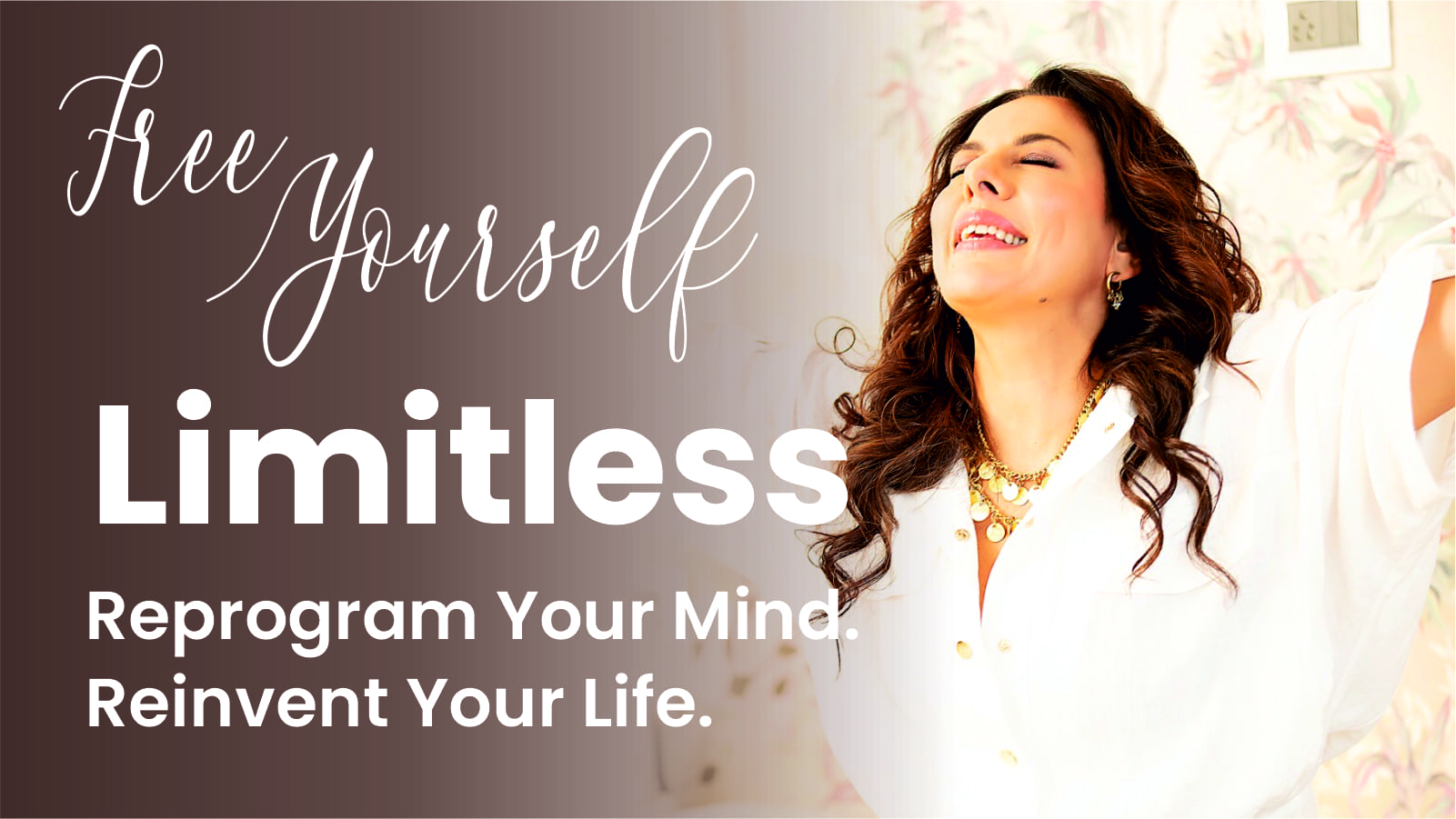
LIMITLESS is a transformative 12-week self-paced online course by Pooja Bedi, designed to help you reprogram your mind, overcome limiting beliefs and unlock your highest potential. Blending practical tools from NLP, clinical hypnosis, mindfulness, energy sciences and holistic wellness, the course empowers you to build confidence, cultivate a positive mindset and create lasting personal transformation. With engaging video lessons, guided meditations, exercises and access to a supportive community, LIMITLESS offers a step-by-step journey toward living with greater clarity, purpose, abundance and happiness.